
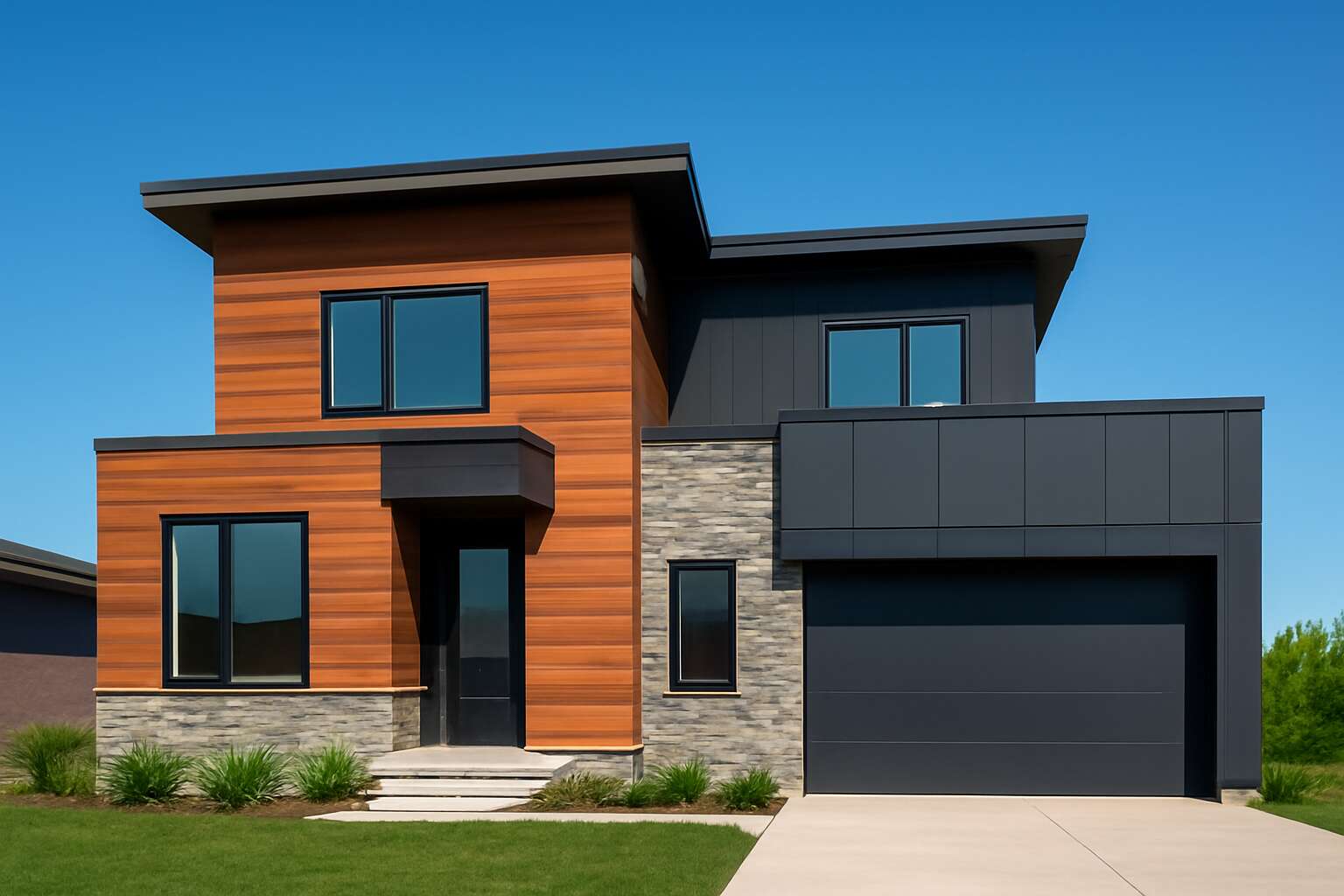
Exterior Cladding Elevation Principles
Key Design Goals for Exterior Facades
Across South Africa’s sun-drenched mosaic, first impressions are forged in seconds as the facade speaks. This wall cladding elevation design harnesses climate, craft, and character to steer the building’s story from first glance.
- Durability against moisture, UV, and Cape winds
- Thermal performance and indoor comfort across seasons
- Aesthetic cohesion with the surrounding landscape and heritage
- Low maintenance and repairability for South African climates
Principles include proportion, shadow play, texture, and colorfastness; in SA contexts, regional materials and heritage inform the narrative. Let the elevation design become a storyteller of light and shelter.
Material Behavior and Performance at Elevation
South Africa’s facades are judged in under seven seconds. The wall cladding elevation design isn’t vanity; it’s climate-smart storytelling—shade, airflow, and texture that invite the eye to linger. It’s architecture speaking in shadows and shelter, with local character stamped on every panel.
Material behavior at elevation matters as much as aesthetic intent. This SA stage demands you anticipate moisture migration, UV bleaching, and wind-driven wear across elevations. The goal is a surface that ages gracefully, not groans after the first rain.
- Moisture management and drainage
- UV stability and colorfastness
- Thermal expansion and wind loads
- Repairability and local maintenance resources
A balanced mix respects heritage, local materials, and the need for sustainable upkeep in SA contexts.
Integration with Building Systems and Structure
A facade isn’t mere skin; it’s a living system that negotiates shade, airflow, and daily use. In South Africa, the elevation of walls determines comfort on each floor and the ability of a building to age gracefully amid sun and wind.
wall cladding elevation design must harmonize with the structure and services—structural grids, insulation, waterproofing, and rain screens—so movement, moisture, and wind are managed rather than battled. The result is a cohesive envelope where panels cooperate with the frame rather than fighting it.
Consider these integration points:
- Structural compatibility with framing and fasteners
- Moisture control through drainage planes and vapor barriers
- Maintenance access and material durability
When these threads align, façades speak with a disciplined confidence that survives SA’s climates and time.
Aesthetics and Longevity Considerations
Exterior cladding elevation principles blend art with the pragmatism SA’s climate demands; a façade that reads as more than decoration can dramatically sharpen comfort and longevity. The right elevation shields interiors from fierce sun, choreographs airflow, and ages with quiet dignity. wall cladding elevation design becomes a dialogue between panel and frame—texture, proportion, and color working in concert rather than in competition.
Consider these aesthetic and longevity anchors:
- Rhythmic alignment with the building’s silhouette
- Color stability and texture resilience under SA sun
- Durability and maintenance cadence that respect decades of use
Done well, the elevation speaks to a discipline more persuasive than fashion—timeless presence that ages gracefully with the city’s wind and light.
Cladding Materials for Exterior Elevations
Natural Stone, Brick, and Concrete Options
Facades that endure the breath of a nation demand more than cover; they tell a story. In wall cladding elevation design, the site becomes a co-author. Cape winds, highveld sun, and time itself shape the texture you see. Natural stone, brick, and concrete stand ready as players in this nocturne.
Natural stone anchors the façade with gravity and veining that age gracefully under SA’s sun and rain. It exudes permanence and a sense of place. Brick offers warmth, texture, and a regional resonance that ages like a weathered hymn. Concrete adds modern form, verticality, and durable resilience in a landscape of changing light.
Three avenues stand out in this design language:
- Natural stone: sculptural heft and timeless veining.
- Brick: tactile warmth and regional character.
- Concrete: crisp geometry and enduring simplicity.
Ceramics, Porcelain, and Stoneware Facades
“Texture is memory,” a phrase that flares in SA skylines, and ceramics, porcelain, and stoneware render that memory in glaze and grain. In wall cladding elevation design, these materials fuse resilience with quiet opulence, weathering Cape winds and shifting light with grace. Their silhouettes tell a place’s story.
Three ceramic families bring distinct virtues to facade storytelling:
- Ceramics and porcelain offer dense vitrified surfaces, rich glazing options, and colorfast appeal under South Africa’s sun.
- Stoneware delivers rugged texture and exceptional durability, aging gracefully yet staying resilient in heat and rain.
- Glazed options let designers mimic natural stone or metallic sheens while benefiting from low maintenance and longevity.
In the landscape of exterior design, these materials harmonize with structure and environment, offering tactile warmth and modern precision. Their performance under changing light reinforces why wall cladding elevation design leans on ceramics, porcelain, and stoneware to craft façades that endure.
Timber and Timber-Look Alternatives
Timber speaks in the Cape breeze—warm, honest, and a touch stubborn! In wall cladding elevation design in SA, timber and timber-look options bring tactile warmth without surrendering modern precision. The material ages with grace, taking on patina that feels rooted in place, weathering wind and light with composure.
Here are timber and timber-look options that suit SA façades:
- Solid timber planks that reveal grain and warmth while standing gracefully in sun.
- Thermally modified timber, stable in humidity and heat, with a reduced need for maintenance.
- Wood-plastic composites (WPC) that mimic timber texture and resist warping and moisture.
- Aluminum or fibre cement panels finished with timber-grain textures for a low-maintenance timber look.
Together with stone, brick, and metal accents, timber finishes create a humane scale that invites passersby to pause and linger.
Metal Panels, Aluminum, and Composite Cladding
In South Africa’s sun-drenched cities and windswept coastlines, metal panels carve architecture with quiet authority. For wall cladding elevation design, they offer disciplined geometry, a finish that catches dawn and dusk, and a resilience that doesn’t yield to time. The surface remains legible under harsh light, offering a stable counterpoint to evolving shadows.
- Metal panels: crisp lines, rapid installation, and enduring rigidity
- Aluminum: light, corrosion-resistant, ideal for coastal zones
- Composite cladding: color stability and minimal maintenance over decades
Together, they broaden the architectural vocabulary, letting façades breathe with modern calm while inviting careful, human interaction.
Design Techniques for Elevation Proportions and Rhythm
Proportions, Scale, and Visual Rhythm
In climate-forward design, a well-proportioned wall cladding elevation design can dampen heat gain by up to 30%, a metric echoed in SA project briefs and client conversations.
Proportion and rhythm hinge on how panels meet openings and edges. Scale matters: a façade should neither overwhelm a street nor fade into it; play with horizontals versus verticals to guide the eye, creating a curated experience across the façade!
- Use consistent module sizes to create a coherent rhythm
- Align cladding joints with window sills and doorheads
- Vary textures at key zones to emphasize hierarchy
Visual rhythm is reinforced by how shadows form as sun travels; this wall cladding elevation design logic applies across Cape Town, Durban, and Johannesburg, keeping façades legible in changing light and seasons.
Color Theory for Facade Depth
Bold façades that master proportions can cut cooling demand by up to 30%. Across South Africa, a balanced elevation reads calm under heat and elevates the street mood at dawn. In wall cladding elevation design, proportion and rhythm shape light and shadow.
Color theory for depth relies on value, saturation, and hue harmony. Start with a cohesive base, then use lighter tones where sun hits and deeper shades in shadow lines to sculpt verticals and horizontals. Warm hues advance while cooler tones recede, letting textures catch the day-light drama.
In Cape Town, Durban, and Johannesburg, daylight shifts with the seasons, yet disciplined elevation design remains legible. Align joints with openings and vary textures at key zones to reinforce hierarchy, creating a façade that feels curated and human, not merely decorative.
Texture and Material Pairings for Interest
‘Good facades are poems in daylight,’ a designer once told me, and the truth rings daily. Proportion starts with a disciplined grid: a quiet rhythm that grounds the eye as light travels across Cape Town, Durban, and Johannesburg. Elevation proportions should feel readable and composed, like a soundtrack that lets sun and shadow take turns in the foreground.
Texture and material pairings for interest hinge on contrast and cadence. This wall cladding elevation design reads not as a collage of trends but as a living surface that evolves with sun angles. A gentle mix of tactile finishes—one plane matte, the next subtly brushed—lets shadows carve depth and invites closer inspection.
- Align rhythmic modules with openings to stabilize perception.
- Layer textures at key zones to catch the changing day-light drama.
Vertical and Horizontal Emphasis in Elevations
Seven seconds is how long a passerby gazes at a building before the eyes settle on its silhouette. Design Techniques for Elevation Proportions and Rhythm govern that moment, shaping how verticals and horizontals converse across the façade. This is the art of wall cladding elevation design.
Consider these ideas:
- The alignment of rhythmic modules with openings creates stable perception.
- Cadence in wall panels—subtle irregularities that avoid monotony.
- Texture variation moderates daylight cues, catching light without shouting.
Across Cape Town’s cliff-hung light, Durban’s humid lilt, and Johannesburg’s open skies, the rhythm must remain legible as sun slides from edge to edge. A wall becomes a living surface, negotiating shade, tone, and tempo with quiet wit.
Architectural Details at Edges and Transitions
Seven seconds is how long a passerby gazes at a building before the silhouette fixes the eye. This is where Design Techniques for Elevation Proportions and Rhythm Architectural Details at Edges and Transitions steer the dialogue across the façade. Align rhythm with openings; introduce subtle irregularities; vary textures to modulate daylight.
- Align rhythm with openings to stabilize perception
- Introduce subtle irregularities in panels to create cadence
- Vary textures to catch light without shouting
African daylight plays tricks from Cape Town to Jo’burg. Across Cape Town’s cliff-hung light, Durban’s humid lilt, and Johannesburg’s open skies, the rhythm stays legible as sun slides edge to edge. The wall becomes a living surface, negotiating shade, tone, and tempo with quiet wit. wall cladding elevation design ensures transitions read clearly as daylight shifts.
Climate, Maintenance, and Compliance for Facades
Weatherproofing, Drainage, and Detailing
The wall is the weather’s diary, and in South Africa the climate writes with sun and sudden downpours. From furnace-hot interiors to wind-sculpted exteriors, wall cladding elevation design must anticipate moisture, temperature, and salt-laden air, turning every elevation into a tuned response rather than a shell.
Maintenance rests on resilient weatherproofing, precise drainage, and detailing that age gracefully. Regular checks keep membranes intact, caulks supple, and flashings faithful to their task.
- Sealants and coatings
- Drainage paths
- Drying cavities
- Corrosion-resistant fixings
These elements sustain the facade’s character while mitigating moisture ingress and staining, ensuring years of readable elevation design outcomes.
Compliance is a living framework—South Africa’s SANS 10400, local by-laws, and stormwater rules shape every detailing choice. Documented testing, reliable drainage, and auditable waterproofing align with the idea that the facade must endure weather and stay legible.
Thermal Performance, Insulation, and Energy Codes
In South Africa, the climate is a volatile maestro—sun-scorched days and sudden downpours. Up to 25% of heating energy escapes through walls that lack proper insulation. The tone of the wind and the glare of heat shape every facade, guiding wall cladding elevation design toward performance, not mere appearance.
Maintenance is the quiet pact that keeps performance alive. I watch insulation stay continuous, seals remain supple, and cavities stay dry; when these hold, the facade ages like well-tended stone.
- Thermal breaks retained through framing
- Ventilated cavity cleanliness
- UV-resistant coatings maintained
- Moisture indicators checked
Compliance is a living framework—South Africa’s energy codes and SANS 10400 shape every decision. When testing and audits are thorough, wall cladding elevation design endures weather and reads as a durable, efficient character.
Code Requirements and Certification for Cladding
South Africa’s climate is a volatile maestro—sun-scorched days and sudden downpours whistle across facades. The right wall cladding elevation design engages heat, wind-driven rain, and thermal movement as a single language, delivering comfort and durability while maintaining curb appeal. The performance story starts here, where envelope details meet real-world conditions with quiet resolve.
Maintenance is the quiet pact that keeps performance alive. Continuous insulation, supple seals, and dry cavities age a facade like well-tended stone.
- Thermal breaks retained through framing
- Ventilated cavity cleanliness
- UV-resistant coatings maintained
- Moisture indicators checked
Compliance is a living framework—South Africa’s energy codes and SANS 10400 shape every decision. Thorough testing and audits ensure that the cladding system endures weather and reads as durable, efficient character.
Maintenance Planning, Replacement, and Longevity
South Africa’s climate acts like a volatile maestro, with blistering sun one day and sudden downpours the next. The right wall cladding elevation design speaks this weather into a quiet, durable language—controlling heat, fending off wind-driven rain, and accommodating thermal movement. That balance translates into comfort for occupants and lasting curb appeal.
Maintenance is the quiet pact that sustains performance—I’ve seen this in projects across South Africa! A continuous insulation strategy, supple seals, and dry cavities keep a façade aging gracefully.
- Thermal breaks retained through framing
- Ventilated cavity cleanliness
- UV-resistant coatings maintained
- Moisture indicators checked
Compliance is a living framework—South Africa’s energy codes and SANS 10400 shape every decision. Thorough testing and audits ensure that the cladding system endures weather and reads as durable, efficient character.
0 Comments