
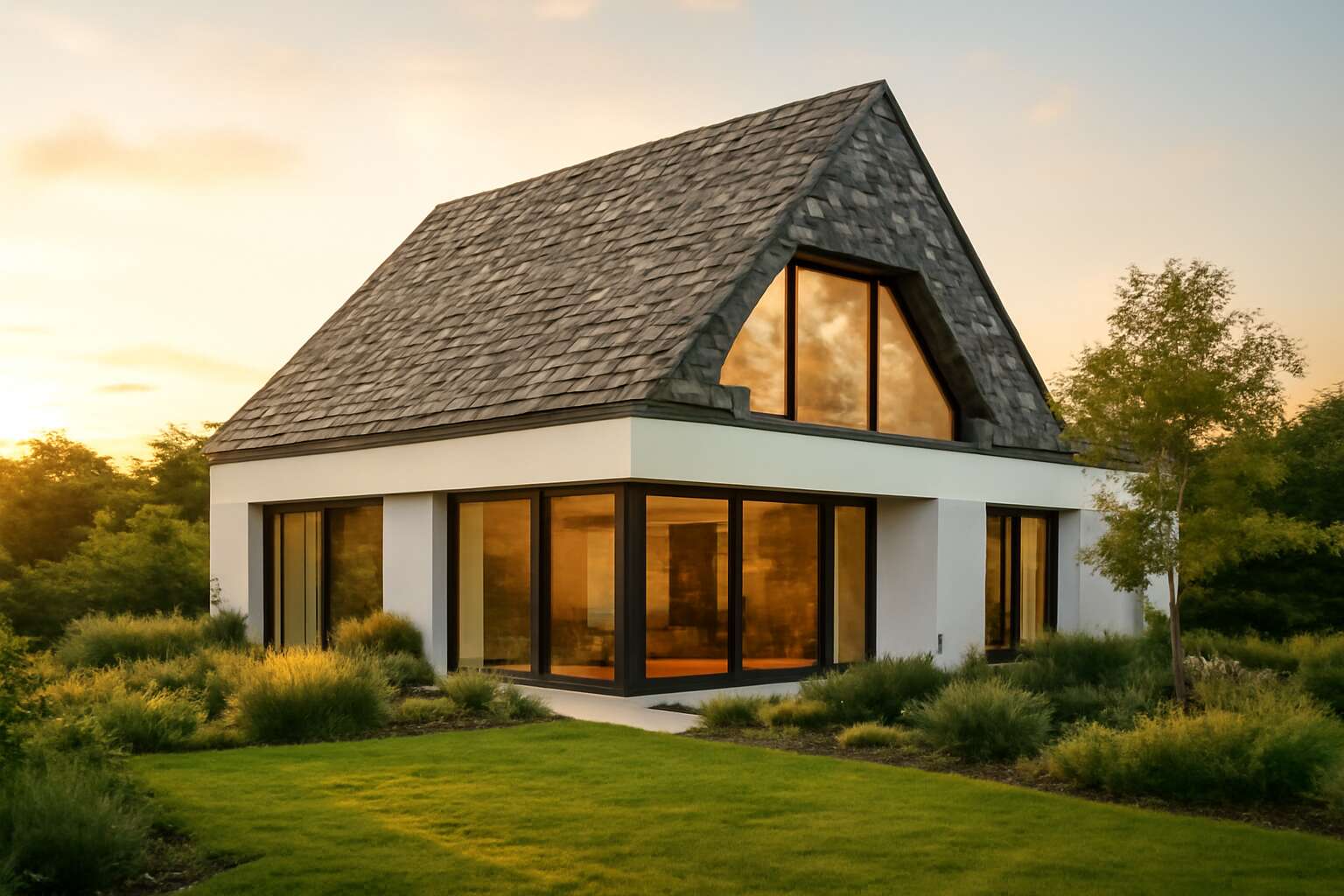
Overview of Stone Cladding on Roofs
Introduction to stone materials and roof cladding
Rooftops that combine flair with climate intelligence are rare enough to notice. In South Africa, a well-installed stone roof can help cool the interior by up to 20%, slashing energy bills in hot summers and keeping homes comfortable well into autumn.
Stone materials bring weather-resistant armour to a roof. The stone cladding roof can use granite for a dense, lasting finish, sandstone for warmth and texture, or limestone for a softer, timeless look. Each option offers unique porosity, colour, and patina that ages with character rather than fading into the background.
Key benefits include:
- Durability and protection against SA’s sun and rain
- Thermal mass that moderates interior temperatures
- Low maintenance compared with timber or metal cladding
For many South African homeowners, it is more than a material—it is a statement of resilience, beauty, and climate-aware design.
Benefits, drawbacks, and suitable roof types
South Africa’s sun is unforgiving, but a stone cladding roof stands up to the heat. In hot summers, a well-chosen stone layer can trim cooling loads by up to 15–20%, making interiors cooler and bills lighter.
Beyond curb appeal, it delivers resilience. The stone adds thermal mass and acts as weather armour, smoothing swings from blazing days to cool nights. Maintenance stays low compared with timber or metal cladding and ages with quiet character.
Trade-offs exist. Higher upfront costs and extra roof weight may require structural checks. Installation demands skilled craft to seal joints and manage drainage for long-term performance.
- Higher initial cost
- Increased roof load
- Need for skilled installation
Suitable roof types include pitched, well-framed designs; heritage or architecturally expressive rooftops; and reinforced flat roofs where drainage is engineered for stone.
A stone cladding roof blends performance with classic aesthetics.
Cost considerations and budgeting for stone roofing
South Africa’s sun is unforgiving, but a stone cladding roof endures with quiet majesty. The upfront cost is higher, and structural checks may be advised, yet the payoff is cooler interiors and fewer repairs as the years turn. Budgeting should balance stone, labour, and drainage, with attention to long-term waterproofing. A stone cladding roof delivers resilience and timeless texture, standing as a shield against heat and weather alike.
Choosing local stone trims transport costs and aligns with SA climate. Include expenses for skilled installation, sealants, and flashing, plus weight considerations that may demand reinforcing the rafters. Plan for contingencies, and remember that accurate budgeting now prevents compromises later on.
From a lifecycle perspective, the investment yields comfort, curb appeal, and enduring value. That balance of function and beauty anchors homes through radiant summers and chilly nights, with each season adding patina to the stone cladding roof.
Design and Aesthetic Considerations for Stone-Clad Roofs
Architectural styles compatible with stone cladding
Stone cladding roof surfaces answer the sun with quiet gravitas, a chorus of granite and shale aging with grace. In South Africa, where light shifts like a watermark across veld, the texture and color of stone harmonize with brick or plaster, shaping a home’s silhouette into a living sculpture.
- Cape Dutch-inspired symmetry with bold gables
- Contemporary minimalism with restrained lines
- Rustic lodge textures echoing veld patina
Architectural styles compatible with the stone cladding roof flow from landscape to eaves, balancing mass with light through thoughtful proportion and rhythm. Let the veining and grain determine the palette, so the home breathes rather than shouts; the stone cladding roof becomes a quiet doorway to endurance and grace!
Color, texture, and pattern options for roofs
A recent survey finds that homes crowned with a stone cladding roof command up to 12% more curb appeal, a quiet testament to endurance. In South Africa’s light, stone reads as architecture’s slow heartbeat—timeless, tactile, and utterly memorable!
Color, texture, and pattern become the three chords of a roof that refuses to shout. I love how warm ochres and shale greys mingle with brick or plaster, while textures range from rugged riven surfaces to satin-smooth faces, each telling a different light-filled story.
- Ashlar coursing
- Random rubble
- Rivened panels
Patterns align with the home’s lines: ashlar, random rubble, or long, even coursing—designed to balance mass and light across eaves and parapets. The roof becomes a living sculpture, catching dawn and dusk in a quiet, grand dialogue.
Roof form integration and drainage considerations
In South Africa, a stone cladding roof anchors a home in the light, giving a silhouette that lingers after sunset. A recent survey notes such roofs command up to 12% more curb appeal—a quiet testament to craft and endurance. The form grounds architecture, while inviting a restrained, timeless dialogue.
To balance mass and light, consider these design cues:
- Line weight and proportion
- Joint pattern echoing stone
- Eave depth and parapet rhythm
- Horizontal alignment with interior planes
Drainage considerations treat rain as a quiet companion. Favor a gentle slope, subtle flashing, and gutters that merge with stone joints, ensuring waterlines stay respectful of texture.
Ultimately, this roof becomes the slow heartbeat of a home, grounding it in place and memory, a living sculpture that evolves with light.
Sustainability and environmental impact of stone materials
“Stone speaks softly but lasts loudly,” a South African architect reminds us, and the stone cladding roof proves it daily. Its design language is restrained yet monumental, where daylight plays along textured faces and returns as a quiet, lasting silhouette against the sky.
Design choices honor the landscape by weaving sustainability with beauty. The environmental impact of stone materials hinges on quarry proximity, processing, and transport—so opt for locally quarried stone and durable finishes that reduce maintenance and waste over decades.
- Local quarry selection to minimize transport emissions
- Durable finishes that lower upkeep and rework
- Reuse of offcuts in future schemes
As a living sculpture, it grows more luminous with age, its patina a record of sun and weather. This material choice threads memory and place, offering a timeless elegance that feels both environmentally prudent and artistically fearless.
Mixing stone with other materials for visual appeal
A stone cladding roof catches the sun like a quiet chorus over the veld—an invitation to linger. In South Africa’s light, designers blend stone with timber, render, and metal to create visual tension that feels both rooted and contemporary. The result is a surface that changes with the day, revealing texture and shade in generous, human scale.
To guide the eye, consider these mixing strategies:
- Warm timber accents soften stone’s gravity
- Contrasting metals or glass for light and edge
- Color echoes drawn from the landscape
Measured siting and scale matter; a thoughtful blend respects the rural setting, weathering gracefully and inviting tactile exploration. This texture becomes a quiet partner to light, wind, and memory, enduring without fuss in the South African climate.
Installation, Construction, and Compliance
Structural prep and roof framing compatibility
Installation sets the stage for the stone cladding roof’s quiet drama. Start with a clean, dry substrate, a proven moisture barrier, and a weather window that South Africa’s summers gladly respect. Careful alignment and well-spaced joints let the stone sing without crowding.
- Substrate readiness and moisture control
- Appropriate expansion joints for natural stone
- Correct fasteners and mortar compatible with stone type
For a stone cladding roof, construction hinges on structural prep and roof framing compatibility. A licensed engineer verifies that rafters or steel purlins carry the load, accommodate mortar, and play nicely with insulation and drainage. Wind uplift is considered early to avoid surprises later.
Compliance matters too. Local building codes and wind-rated standards guide fastener choices and mortar strength. The goal is a seamless marriage of masonry and framing, with a final inspection ensuring the system remains durable in South Africa’s sun, rain, and seasonal storms.
Waterproofing, flashing, and drainage strategies
Installation of a stone cladding roof is a quiet act of balance. In South Africa’s sun, the look must meet performance, and the surface should align with the roofline as if the stone itself were part of the horizon. A stone cladding roof is more than decoration; it’s weather poetry carved in rock, designed to endure while staying elegant.
Construction hinges on a seasoned engineer’s eye, ensuring rafters or purlins carry the load and talk softly with insulation and drainage. Wind uplift is anticipated early, and fastener choices align with the mortar and stone type, keeping everything stable yet adaptable to seasonal shifts and the rhythms of coastal and highveld storms.
Compliance waterproofing, flashing, and drainage strategies knit the system together.
- Waterproofing membranes bridging joints and substrate
- Flashing integrated with stone at penetrations and transitions
- Drainage: slope, gutters, and downpipes for SA rain patterns
Fixing methods, mortar types, and lapping patterns
“Stone endures,” a craftsman would tell you, and a stone cladding roof proves it. It endures with patient cadence, a covenant between line and horizon. In South Africa’s sun and rain, installation must be precise, balancing weight, wind, and the quiet language of stone against the roof’s silhouette.
Construction hinges on a seasoned eye: rafters or purlins bearing the load, with insulation and drainage kept in harmonious dialogue. Mortar types suit the climate: cementitious for strength, lime-based for breathability, polymer-modified blends for resilience.
- Mortar types: cementitious, lime-based, polymer-modified blends
- Fixing methods: mechanical anchors, concealed clips, stainless steel fixings
- Lapping patterns: running bond, staggered ashlar courses
Compliance and fixing strategies knit the system together, with flashing integrated at penetrations and membranes bridging joints, so water finds its way along controlled paths and away from vulnerable seams. SA rain patterns demand precise overlaps and tested drainage alignment.
Code compliance, warranties, and industry standards
A well-executed stone cladding roof speaks to endurance. In South Africa’s sun and rain, installation must meet precision and balance, a covenant between heritage and weather that ages with quiet grace!
Construction hinges on a careful dialogue between structure and skin: the frame, insulation, and drainage must align, supporting weight, guiding moisture, and preserving the roof’s silhouette against wind and heat.
Compliance, warranties, and industry standards attach the project to solid ground. South Africa’s building regulations and SANS standards guide every detail, while manufacturer guarantees and installer warranties secure long-term performance.
- National Building Regulations and SANS standards compliance
- Manufacturer and installer warranties
- Independent inspections and accredited installers
Project planning, timelines, and contractor selection
South Africa’s sun blazes and storms hammer; a stone cladding roof endures when planned with a craftsman’s patience and a designer’s eye. An intentional build ages with quiet grace, turning weather into character rather than damage.
Installation hinges on a dialogue between frame and skin: the roof structure must bear weight, insulation stay balanced, and drainage remain unobstructed. Timelines crystallize when milestones are clear and suppliers know lead times. The plan should anticipate what happens after the first drizzle.
- Scope definition and realistic timelines based on site conditions
- Contractor selection: accreditation, references, and warranty terms
- Contingency buffers for weather, procurement, and logistics
Compliance anchors the effort: align with local building regulations and standards, secure manufacturer guarantees, and invite independent inspections to verify the install quality of the stone cladding roof.
Quality assurance and on-site inspection practices
South Africa’s climate tests every choice we make in the roofline. A stone cladding roof stands or sags by the quiet fidelity of the build. In Construction, on the ground and on the roof, a dialogue between frame and skin emerges: weights sit evenly, insulation stays balanced, and drainage remains unblocked. Rushing the first drizzle invites trouble—watch how each stone settles, how the mortar kiss between stones remains true, and how the roof breathes with the house rather than against it.
Quality assurance and on-site inspection practices keep the project honest, guiding installation, construction, and compliance with a steady hand.
- Independent third‑party inspections at key milestones ensuring framing, cladding, and final reveal meet standards
- Verification of manufacturer guarantees and project warranties, with documented compliance checks and traceable materials
- Accessible snag lists and digital records that capture workmanship, approvals, and sign-offs for future maintenance
Compliance anchors the effort: align with local regulations, secure guarantees, and invite independent inspections to verify on-site workmanship. Such rigor turns weather into character rather than damage, and gives homeowners lasting peace of mind.
Maintenance, Repairs, and Longevity of Stone-Clad Roofs
Cleaning, sealing, and protective finishes
Inspection routines and identifying common issues
Maintenance is a quiet, ongoing vow. ‘Time is a stone’s best ally,’ a mantra I carry as I work with SA’s sun and coastal winds to shape a roof that ages with dignity. Routine visual checks after each season reveal movement, staining, or mortar wear before they become costly repairs. Aesthetically, the surface remains timeless, a reminder that craft endures beyond fashion.
- Loosened or migrated mortar joints
- Loose or cracked stones
- Degraded flashing or corrosion at joints
- Blocked drainage paths or pooled moisture near edges
- Efflorescence or staining indicating moisture movement
Longevity rests on ongoing stewardship. Between inspections, gutters and splash zones should shed water freely, and professionals will assess the mortar bond, stone integrity, and any need for repointing or selective replacement. When treated with restraint and care, the roof carries a home’s story for generations, aging gracefully with the land and light.
Repair options for damaged stone and joints
Stone remembers rain and wind, yet it answers with enduring grace. Maintenance is a quiet, ongoing vow for a stone cladding roof facing South Africa’s sun and coastal winds. Routine visual checks after each season reveal movement, staining, or mortar wear before they become costly repairs, allowing the surface to age with dignity.
Repair options for damaged stone and joints offer a measured arc from restoration to renewal. A professional will assess the mortar bond, stone integrity, and drainage at the edges to guide the process.
- Repointing with matching mortar to restore joints
- Selective replacement of damaged stones with closely matched blocks
- Repairing flashing and seals to maintain edge waterproofing
- Addressing efflorescence to trace moisture movement
Longevity rests on quiet stewardship; between inspections, drainage and breathability keep the stone cladding roof resilient. With restraint and care, the roof carries a home’s tale for generations, aging gracefully with land and light.
Seasonal care, weather considerations, and protective measures
Maintenance is a quiet covenant that keeps a stone cladding roof singing through seasons. Under South Africa’s blazing sun and the pull of coastal winds, a steady routine preserves its beauty and integrity. A seasonal visual check reveals movement, staining, or mortar wear before they become costly repairs, allowing the surface to age with dignity.
- Seasonal checks after each season to catch movement, staining, or mortar wear early
- Protective measures against salt spray and sun by careful cleaning and timely resealing
- Maintaining drainage paths and breathability to keep the stone skin dry and flexible
Longevity rests on quiet stewardship; routine attention keeps the cladding strong as the years turn. With restraint and care, the roof carries a home’s tale for generations, aging gracefully with land and light.
When to retrofit or replace stone cladding
Maintenance is a patient, moonlit vigil for the stone cladding roof. Under the South African sun and coastal gusts, steady care preserves beauty and strength. A seasonal check catches micro-movements, staining, or joints that loosen before they betray the surface.
- subtle movement hinting at wind or settlement
- discoloration creeping beyond surface cleaning
- joint wear or minor cracks edging toward exposure
Repairs are subtle and depend on the extent of harm. If damage remains contained, a retrofit approach can preserve the character of the stone cladding roof; when damage escalates or substrate integrity is uncertain, replacement becomes the wiser, long-term choice.
Longevity rests on quiet stewardship; regular inspections and timely interventions keep the stone cladding roof performing for decades, aging gracefully with land and light.
Case studies: long-lasting stone-clad roof installations
Maintenance is the quiet handshake with your stone cladding roof. In South Africa’s sun, steady care keeps beauty and strength intact. A coastal case study shows 25-year performance when routine inspections, repointing, and moss control are part of the ritual.
- Seasonal cleaning to remove salt and debris
- Joint inspection and timely repointing
- Moss control and moisture management
Repairs are subtle and proportional. If damage remains contained, retrofit preserves the roof’s character; when harm escalates or substrate integrity is uncertain, replacement becomes the wiser long-term bet. Case studies across SA coastal and inland homes illustrate the value.
Longevity rests on quiet stewardship; regular inspections and timely interventions keep the system performing for decades, aging gracefully with land and light. From sea-facing villas to rural estates, patient upkeep rewards with texture that ages gracefully.


0 Comments