
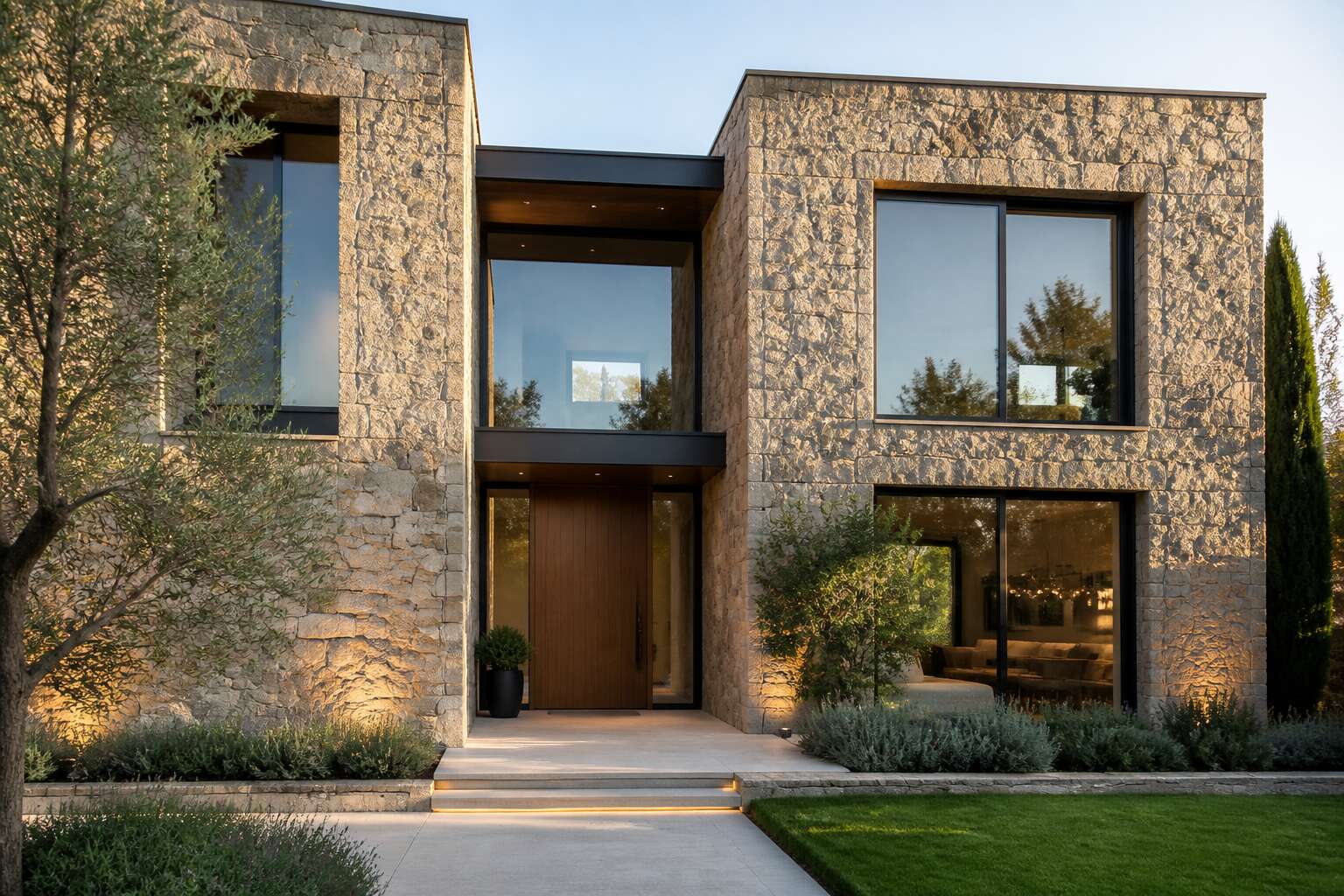
Why Choose Stone Cladding for Your Home’s Exterior
Enhancing Curb Appeal and Property Value
Stone cladding elevation changes how a home presents itself. In South Africa’s harsh sunlight, natural stone surfaces play with light and shadow in ways that plain render cannot. This visual texture drives curb appeal, making a property noticeable before a buyer even steps inside. The solidity of stone signals permanence, a trait that appraisers and purchasers genuinely respect.
Recent property reports from Cape Town and Johannesburg show that stone-clad homes sell for a premium, often covering the initial installation cost. Paint fades and cracks; stone stands firm through heat, wind, and rain. That endurance turns into a financial asset, visible every day from the street and felt in the final asking price.
Durability and Weather Resistance
South Africa’s climate presents a formidable challenge for any home exterior. From the brutal UV rays of a Karoo summer to the salt-laden winds whipping the Cape Peninsula and the violent hailstorms of the Highveld, the elements wage a constant war on building materials. While paints peel and timber warps under this assault, a stone cladding elevation stands as an immovable sentinel, its performance improving with age rather than deteriorating.
This isn’t merely about surface toughness. The physical mass of natural stone acts as a thermal buffer, absorbing heat during the day and releasing it slowly at night. This natural regulation reduces the strain on your air conditioning in both summer and winter, a practical benefit that directly lowers monthly energy bills. Furthermore, stone veneer provides an exceptional barrier against moisture ingress, which is the primary cause of structural decay and unsightly mould growth on many South African homes. It is a decision that makes long-term financial sense, as the maintenance costs traditionally associated with repainting and repairs are virtually eliminated.
So, how exactly does stone handle all this? Consider the specific qualities that make it a superior shield for your property:
– Fire Resistance: Stone is inherently non-combustible, offering a passive defence against runaway veld fires, a growing concern in many suburban and rural areas.
– Impact Resistance: It easily withstands the force of wind-blown debris and hailstones that would dent or crack other cladding materials.
– Zero Upkeep: There is no need to sand, prime, or repaint. A simple wash with a pressure cleaner restores its original vibrancy after a dusty winter.
– Pest Deterrent: Unlike timber, stone offers no food source or nesting ground for pesky insects or rodents.
When you consider the lifespan of a painted exterior versus the permanence of a properly installed stone cladding elevation, the choice becomes clear. A painted wall might require a fresh coat every five to seven years, a recurring expense that adds up significantly. Stone, on the other hand, is a one-time investment in your home’s structural integrity. It is the difference between a solution that fades and one that endures, providing continuous protection through every South African season without requiring your constant attention.
Energy Efficiency and Insulation Benefits
Rising electricity prices are forcing South African homeowners to rethink how they build and renovate. A stone cladding elevation changes the thermal profile of a home because natural stone has high density and inherent insulating mass.
When the sun beats down all day, the stone absorbs that heat energy. As evening approaches and temperatures fall, the stone gradually releases its stored warmth. This natural cycle reduces reliance on electric underfloor heating in winter and heavy air conditioning during summer.
The cumulative energy savings are visible on your next municipal bill:
– A more stable indoor temperature throughout the year
– Less need for electric heaters and fans
– Lower heating and cooling costs that persist for decades
Stone does not need to be switched on to work. It simply works, season after season, moderating even the harshest South African weather.
Low Maintenance Compared to Alternatives
A stone cladding elevation eliminates the endless maintenance cycle that plagues other exterior finishes. Timber cladding demands biocidal treatments against African termites. Painted plaster requires recoating every three to five years under the Highveld sun. Stone simply stands there. It never peels, blisters, or warps. A single rinse with a hosepipe clears accumulated dust.
Consider what you will never buy again:
- Exterior paint and primer
- Wood sealants and preservatives
- Mould remover for shaded walls
The savings go beyond the hardware store. Hours once spent on ladders return to your weekends. Over a decade, the cost of ownership for a stone cladding elevation remains almost flat, while alternative facades demand repeated investment. For South African homeowners, this quiet financial predictability is the real luxury.
Exploring Stone Cladding Materials and Textures
Natural Stone vs. Manufactured Veneer
Selecting the material for your stone cladding elevation is a decision between geological authenticity and engineered precision. Natural stone carries the memory of ancient pressure and time, offering a palette of slate, quartzite, and granite that is unique to its quarry of origin. Hand-split faces reveal a raw texture that changes with the light, and the tactile quality of genuine rock adds an unspoken authority to a facade.
Manufactured veneer, however, presents a compelling counterpoint. These are lightweight panels crafted from concrete and iron oxide pigments, cast from moulds of real stone. The primary advantage lies in their practical application; they are less demanding on structural foundations and often simpler to install. For a homeowner concerned with the load on an existing wall, this option allows for the same visual language without the same physical weight.
Here is a swift comparison for clarity:
– Thickness: Natural stone is heavy and thick, while veneer is slim and light.
– Installation: Veneer often uses a simple adhesive system, whereas natural stone may require mortar and lath.
– Cost: Manufactured options are generally more budget friendly, with a lower price per square metre.
– Appearance: Natural stone offers irregular, one of a kind patterns; veneer provides a consistent, repeatable design.
Ultimately, your choice for the stone cladding elevation will hinge on the structural realities of your home and your aesthetic appetite for uniformity versus organic variation. Both materials can achieve a striking elevation, but they speak different dialects of the same architectural language.
Popular Stone Types: Slate, Quartzite, Limestone, Travertine
Slate, quartzite, limestone, and travertine offer distinct textures for a stone cladding elevation. Slate splits into thin, smooth layers with a dark, matte finish. Quartzite shows a crystalline surface forged from sandstone under heat. Limestone presents a soft, uniform grain in warm creams and greys. Travertine displays natural pits and troughs from mineral springs.
The tactile difference matters as much as the colour. I often advise clients to handle samples, because light and shadow will reshape these surfaces through the day! Some stones absorb the morning glow, others reflect it sharply.
- Slate resists water and frost, ideal for high rainfall regions.
- Quartzite scores high on hardness, surviving coastal salt and wind.
- Limestone requires sealing but ages with a gentle patina.
- Travertine weighs less, simplifying installation on a stone cladding elevation.
Color Palettes and Texture Variations
A stone cladding elevation turns colour and texture into a physical statement. Warm ochres mimic the Karoo’s dust. Cool greys echo Atlantic fog. But texture variation matters more than shade. For example:
- Split face: rough, angular, throws shadows at noon
- Honed: smooth and matte, soaks the morning light
- Tumbled: edges worn soft, suggests age without real wear
Each finish changes how this elevation looks from the street. In my experience, a mixed palette of cream and graphite, paired with stacked bond, creates rhythm. Local stones like granite gneiss and sandstone bring unique speckles and rust tones. Sample boards under a shop light compare poorly to a real wall. The Highveld sun shifts shadows from morning to dusk.
Finishes: Honed, Tumbled, Split Face, and More
Selecting the Right Material for Your Climate
South Africa’s climates range from arid Karoo conditions to humid KwaZulu-Natal coastlines. Your stone cladding elevation must contend with this variety. A porous material that thrives in one region may fail in another within a decade. The Cape’s winter rainfall creates repeated wet-dry cycles that accelerate deterioration in softer stones. For inland Highveld areas with intense UV exposure, darker surfaces absorb excessive heat and cause differential expansion.
What about the coast? Salt-laden air in the Western Cape demands denser materials. I always ask clients to choose their stone cladding elevation based on microclimate, not just appearance. Split-faced granite behaves differently in Durban’s humidity than in Johannesburg’s dry winters.
Consider these regional factors:
- Coastal: Salt spray influences stone durability
- Highveld: UV radiation and thermal stress
- Karoo: Wide temperature swings between day and night
Creative Design Concepts for Exterior Stone Elevations
Full-Body Cladding for a Bold Statement
Full-body cladding can transform a building. Stone cladding elevation demands attention when it covers every surface. This technique creates a fortress-like presence in South African homes and offices.
Designers combine materials for impact. A common approach uses quartzite slabs with rough slate accents. Another pairs limestone blocks with recessed joints. Travertine panels with brushed texture offer a softer profile.
Consider these bold concepts:
- Full-height cladding with no horizontal breaks
- Mixed stone sizes in a single facade
- Deep shadow gaps between panels
This style signals permanence. It changes how a building sits on its land. That boldness is the point.
Accent Walls and Feature Panels
Accent walls serve a direct purpose in stone cladding elevation. They break up a flat facade without the cost of full cladding. A single gable end in quartzite can change how a house reads from the street. In Johannesburg, I have seen homes where a rough slate panel sits beside smooth plaster. The contrast is deliberate.
Feature panels work well around entrances. A vertical band of limestone frames a front door. It draws the eye upward. For a cohesive look:
– Use the same stone as the boundary wall
– Match the joint width to the existing masonry
– Keep the panel depth shallow to avoid heavy shadows
These choices give a building a focal point. The stone cladding elevation stays restrained, but the effect is memorable.
Combining Stone with Other Cladding Materials
The true alchemy of exterior design happens when you stop letting stone do all the heavy lifting. A stone cladding elevation is a remarkable chameleon, but even a chameleon needs a contrasting leaf. Pairing a rugged, cleft face slate with a warm toned timber slat screen creates a rhythm of warm and cool, rough and smooth. The stone grounds the facade, while the timber adds a softer, human scale that is inviting.
This is not about hiding the stone, but giving it a supporting cast. In fact, a poorly considered transition is the quickest way to turn a custom home into a municipal library. Consider the junction where the stone meets a smooth, mineral render. Without a planned reveal, it looks like a construction accident. You can mitigate this by following a few guidelines:
– Recess the stone panels behind a protruding trim board to create a dramatic shadow line.
– Utilize a smooth, dark trowel-on coating to frame a stone chimney, drawing the eye upward.
– Alternatively, let the stone kick out slightly and cap it with a slim, brushed steel angle to create a crisp, sharp edge.
The play of light against these different surfaces is the real game changer. A dark, honed basalt will visibly absorb heat and create a solid, weighty presence against a glassy, frameless window. It creates a deliberate visual pause. The stone acts as an anchor, while the other materials allow the building to breathe and feel like a home, not a cave. This is how you create a facade that feels curated, not just covered.
Patterns: Stacked, Ashlar, Rubble, and Herringbone
The geometry of a facade demands attention before the material registers. A stone cladding elevation patterned in stacked joints shows disciplined masonry, each course aligned to the millimetre. Ashlar introduces variation, its squared blocks differing in height to create rhythm without chaos. Rubble rejects order entirely, its raw, broken edges exposed to the elements. Herringbone, set at diagonals, catches the Highveld light in constant flux. I have watched a boundary wall transform through this single choice. The pattern dictates the mood:
- Stacked: severe, architectural, silent
- Ashlar: measured, classical, composed
- Rubble: primal, weathered, restless
- Herringbone: agitated, directional, alive
A stone cladding elevation becomes a narrative of control or surrender. Choose deliberately, because the wall will record your decision.
Using Stone Around Entrances and Windows
The entrance is the threshold, and the window is the eye. A stone cladding elevation truly declares itself at these points, where solid wall gives way to opening. You can frame a doorway with pronounced jambs that project from the plane.
The creative concept is to treat these openings not as holes, but as focal points of texture. Consider the effect of a finely honed sill against a split face wall. The contrast of textures is a design element in itself Unemployment risk.
For a singular approach:
– Recess the window within a deep reveal of stone.
– Use a horizontal stone band above the entrance to create a lintel that draws the eye across the facade.
– Flute a single vertical course beside the door to add shadow and verticality.
A stone cladding elevation becomes a conversation between light and stone, dictating how the sun paints the surface. The placement of these features can extend the interior living space onto the exterior, visually linking the garden with the house. The southern light on the coast changes everything.
Modern Minimalist Approaches to Stone Elevation
Modern minimalism demands restraint. In South African design, a stone cladding elevation must earn its place within the landscape, not announce itself against it. The highveld light is fierce and direct. Coastal conditions offer a diffused glow that catches every surface differently. One facade cannot serve both conditions.
Consider your home within its specific geometry. A stone cladding elevation should relate to the ground plane, the shadows cast by existing trees, and the way you approach the front door. Using fewer materials is not the goal. Honest expression of the material is.
Texture becomes the primary tool:
- Honed finishes soften afternoon reflection.
- Riven surfaces catch low winter light.
- Consistent stone scale adds quiet rhythm.
That is minimalism with genuine presence.
Step-by-Step Guide to Installing Stone Cladding
Preparing the Surface and Substrate
The promise of a stone cladding elevation is a promise of permanence. Yet the true alchemy happens long before the first stone is set, in the quiet ritual of preparation. A wall that is not correctly primed is a canvas that rejects its paint. The substrata, whether it is brick, concrete block, or a timber frame, holds the key to the project’s longevity. This initial labour is the quiet debt you pay to the future.
First, you must assess the honesty of the wall. It must be clean, sound, and free from any trace of efflorescence, that ghostly white residue of mineral salts. Power washing is a common first step, but it requires a period of drying that the impatient often ignore. Cracks or spalling must be repaired with a suitable mortar or patching compound. For a stone cladding elevation, any movement in the substrate will translate into visible distress later. Ensure all existing paint or loose render is stripped away completely. The surface must offer a mechanical key for the adhesive bond.
Once the wall is structurally honest, you introduce a metal lath or a cementitious backer board to act as an intermediary. This step is not mere bureaucracy. For a stone cladding elevation, the lath provides the tensile strength that prevents the entire assembly from shearing off the wall over time.
– Fasten the lath securely with corrosion-resistant screws or nails.
– Overlap the lath edges by several inches to avoid weak seams.
– Apply a scratch coat of mortar and allow it to cure until it is firm but still slightly rough.
This scratch coat should be left to set for at least 24 hours before the veneer is applied. In the South African climate, where thermal shock is common, this patience is your shield. The substrate is no longer a simple wall. It is a dedicated, reinforced host, engineered to carry the weight of your chosen aesthetic for decades to come.
Applying the Adhesive and Setting the Stones
The scratch coat has cured. Mix a polymer-modified thin-set mortar until it holds a peak when the trowel lifts. Too loose, gravity wins! Too stiff, the bond weakens.
For a stone cladding elevation, use a notched trowel at a steady angle. Comb the adhesive in uniform ridges across the backer board. Those furrows prevent air pockets and give the mortar purchase. Work in sections no larger than a square metre.
Butter the back of each stone, press it into the ridges with a firm twist. This seating action separates a bond that lasts decades from one that fails quietly. Keep this sequence:
- Start at corners and work inward.
- Use wooden shims to hold joint widths.
- Tamp gently with a rubber mallet.
The stone cladding elevation cures overnight into a bond that carries its own weight.
Grouting, Sealing, and Curing
With the stones seated, the joints wait for their final dressing. Remove the wooden shims once the adhesive has set. Then pack the gaps with a grout that matches the stone’s character. A grout bag gives you control, while a trowel demands a steadier hand.
- Fill joints flush first.
- Tool them to a slight recess after thirty minutes.
- Brush away residue before it hardens.
Sealing follows once the grout cures. A penetrating sealer protects the stone cladding elevation without altering its texture. Water beads away, and efflorescence loses its foothold. Full curing takes days, not hours. Keep foot traffic away and let the work settle into place.
Long-Term Care for Stone Clad Façades
Cleaning Methods and Products to Use
Most damage to a stone cladding elevation begins quietly: a film of grime here, a patch of moss there. I have watched facades in Johannesburg’s Highveld and along the Cape coast age very differently, and that difference dictates the cleaning they need. The response must be measured. High-pressure washing forces water behind the cladding and can compromise the bond. Instead, wet the surface first, then apply a pH-neutral stone cleaner, without citrus or vinegar, since acids etch natural stone. Agitate gently with a soft brush and rinse with low-pressure water.
Where algae or moss appears in shaded areas, dilute hydrogen peroxide handles it better than bleach:
- pH-neutral cleaner designed for natural stone
- Soft bristle brush or low-pressure washer
- Hydrogen peroxide solution for biological staining
Use these products only on your stone cladding elevation. The facade then holds its integrity well beyond its first decade, and your maintenance costs become predictable.
Inspecting for Cracks and Moisture Issues
A stone cladding elevation can appear permanent, but time and weather take their toll. Damage often begins where you least expect it, in the tiny hairline fractures that appear after a few harsh Highveld summers or a particularly wet Cape winter. You might not notice these at ground level, but they are the starting point for more serious issues.
Inspecting for cracks is not about finding obvious faults. It is about catching the subtle ones, the thin lines that spider across a panel or the widened joints between stones. These openings allow moisture to seep behind the cladding, where it can corrode the metal fixings or gradually weaken the adhesive bond. A loose panel that sounds hollow when tapped is a clear warning sign, and it demands immediate attention rather than a wait-and-see approach.
Moisture issues are often visible before they cause structural damage. Look for the tell-tale signs of efflorescence, that white, powdery residue that appears on the surface when water evaporates and leaves mineral salts behind. Dark, damp patches that never seem to dry out are another red flag. These can indicate a failing sealant or a problem with the drainage behind the cladding.
When you examine your elevation, pay attention to these specific areas:
– The bottom course of stones, where water splashes back from the ground.
– The corners of the building, which are subject to wind-driven rain.
– The edges around windows and door frames, where sealants often fail first.
A stone cladding elevation that is well-maintained is an asset that retains its character for decades. Catching a small crack early means a simple repair. Letting it go for another season can mean water damage that compromises the entire wall system, and that becomes a costly project no one wants. Regular, attentive inspection is the most economical maintenance you can perform.
Waterproofing and Re-Sealing Schedules
Your stone cladding elevation is a significant investment, but it’s not a set-and-forget feature. The harsh realities of the South African climate, from the Highveld’s intense UV rays to the Cape’s relentless wind-driven rain, demand a proactive approach to maintenance.
Water is the primary enemy. It finds its way into the smallest imperfections, and over time, this infiltration can undermine the structural integrity of the entire façade. The key is to focus on the joints and sealants, which are your first line of defence.
We recommend a regular inspection routine to check the condition of your elevation:
– Examine sealant joints around windows, doors, and corners for cracking or separation.
– Look for any signs of water staining, which often appears as dark patches or mineral deposits.
– Check the weep holes at the base of the wall to ensure they are clear and allowing moisture to escape.
Don’t wait for visible damage to appear. A proactive re-sealing schedule, typically every five to seven years, will significantly extend the life of your stone cladding elevation. This simple step prevents costly structural repairs down the line and keeps your property looking its best.
Repairing and Replacing Damaged Stones
Even the most robust stone cladding elevation will eventually show signs of wear. Cracks from thermal movement, chips from errant garden tools, or spalling caused by trapped moisture are all common issues. Ignoring a small fissure invites bigger problems, as water will find its way behind the veneer and loosen the adhesive bond.
Repairing a damaged stone cladding elevation is often a matter of targeted replacement rather than a full overhaul. For minor chips, a high-quality stone repair epoxy can be tinted to match the surrounding rock, making the fix virtually invisible. However, when a slab is cracked through or has begun to delaminate, removing the affected piece is the only viable option. You must carefully cut the mortar joint around the damaged unit, extract it without disturbing the neighbouring stones, and then set a new piece using a fresh bed of adhesive.
Full replacement of a single stone on your cladding elevation requires a precise match. Natural stone varies in colour and veining, so source the replacement from the same quarry or batch if possible. If the damage extends to the underlying substrate, you are dealing with a structural issue that demands professional assessment. A failing substrate compromises the entire wall, not just the visible face. In that case, bring in a specialist who understands the load-bearing nuances of stone veneer systems. Proactive monitoring of your stone cladding elevation ensures minor wear never escalates into a costly structural repair.
0 Comments