
Choosing the Right Cladding Material
Wood Cladding Options
Choosing the right cladding material for a living room depends on climate and maintenance. South African interiors face intense sun and damp winters, so wood selection needs practical thought. In my experience, treated pine is a solid budget option, while oak offers a denser, more formal surface. Reclaimed timber carries immediate character, but it requires sealing against moisture.
Wood cladding options differ in performance as much as appearance. Consider these choices:
- Shiplap boards for clean, continuous lines
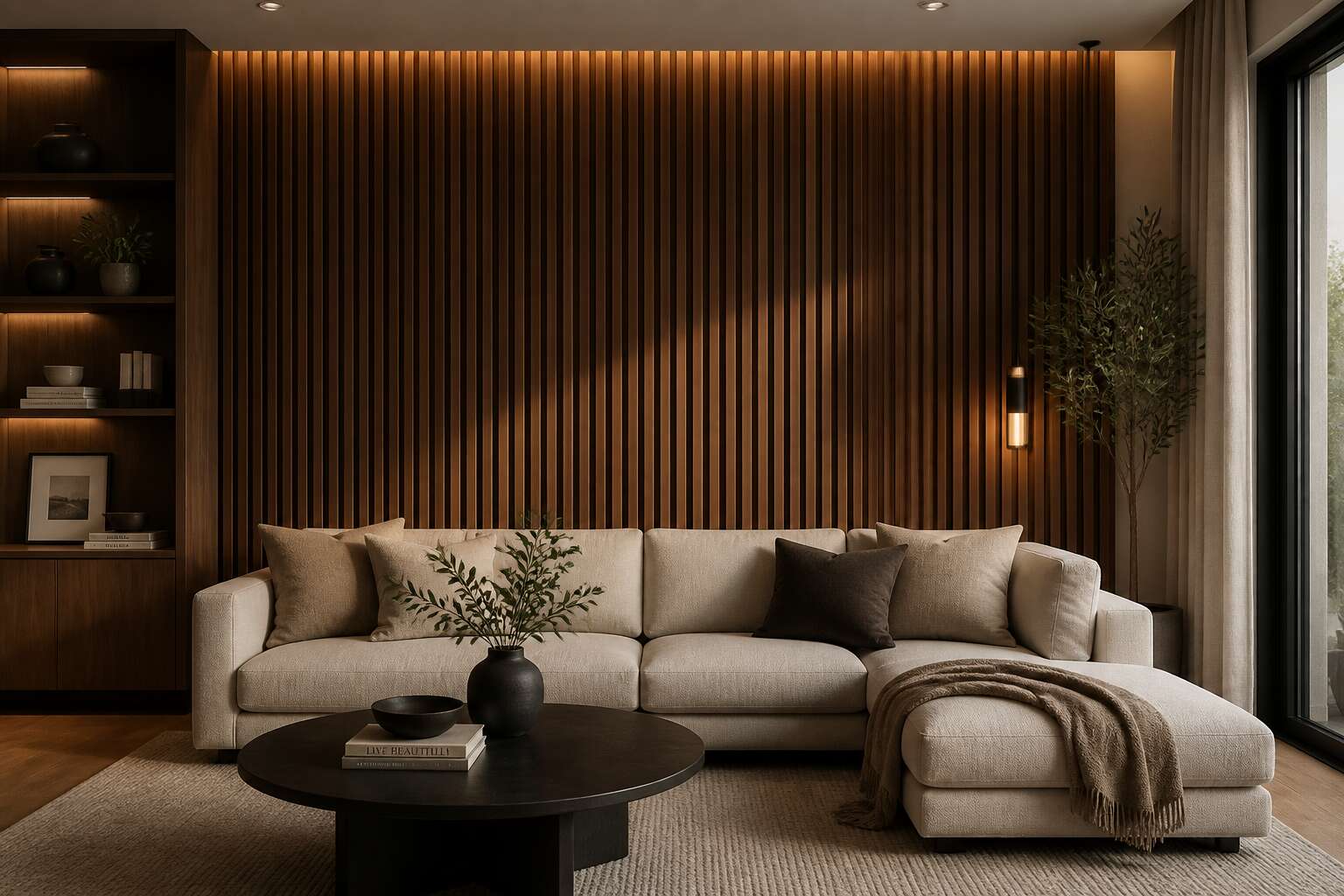
- Slatted timber for sound absorption and a modern rhythm
- Engineered planks for dimensional stability in variable weather
Each option changes how light moves through the room. Darker woods absorb it and make the space feel enclosed. Lighter species like ash or poplar reflect light and expand a small living area. When you browse wall cladding ideas for living room projects, prioritise the practical details. Oak needs regular oiling, pine dents easily, and engineered wood resists warping better than most solid timber.
Stone and Brick Veneers
Stone veneers invite a commitment, financially and physically. They are heavy, expensive, and unaffected by passing fads. Brick veneers, in contrast, deliver factory loft charm without the asbestos. In South Africa, stone handles sun well but absorbs moisture, so sealing is mandatory. Brick handles humidity well, though it collects grime in the joints.
For wall cladding ideas for living room projects, decide between these burdens:
- Natural stone requires professional installation
- Brick veneer suits moderate DIY skills
- Stone adds significant weight to the wall structure
The real question is whether you want to impress guests or simply stop the wind.
Metal and Industrial Finishes
Metal and industrial finishes do not whisper. They announce.
Corten steel, with its rusted patina, changes colour over time. It captures the harsh Highveld light and throws it back. Aluminium, on the other hand, stays clean and sharp. It suits a modern Joburg loft or a coastal home in Durban where salt air corrodes lesser materials.
Here is where wall cladding ideas for living room projects take a utilitarian turn. You are not hiding the surface. You are celebrating its function.
Industrial finishes forgive neglect. They do not require the constant sealing that natural stone demands. They do not swell or warp like timber in the Cape humidity. A simple wipe down handles dust. That is it.
– Cor-ten steel develops a protective rust layer, no painting required
– Brushed aluminium resists corrosion and stays lightweight
– Perforated metal panels diffuse light and add texture without bulk
Some homeowners worry about the cold aesthetic. It is a fair concern. But pair the metal with soft furnishings, a wool rug, warm lighting, and the contrast becomes the design. The material grounds the space. It gives the room an edge that wallpaper simply cannot match.
The industrial look also photographs exceptionally well. That matters in a market driven by property portals and Instagram. A textured metal feature wall behind the television creates depth. It gives buyers something to remember.
For those seeking wall cladding ideas for living room vibes that break from the coastal or rustic norm, metal delivers a decisive answer. Just ensure an electrician checks the wall before drilling. Metal conducts. Your safety matters more than the aesthetic.
Composite and Synthetic Panels
Composite and synthetic panels are the wall cladding ideas for living room projects that your bank account will thank you for later. These materials offer the look of timber or stone without the maintenance rituals attached to the real thing. High-pressure laminate, rigid PVC boards and wood-plastic composites dominate this category.
The magic lives in the printing. Modern digital technology gives synthetic surfaces a believable grain you cannot distinguish from actual timber at a normal viewing distance. Touch remains the giveaway. Nothing replicates the slight warmth of genuine wood. But for a rental in Sandton or a weekend spot in Hermanus, the hard-wearing nature wins.
Consider what the wall must endure. A composite panel behind the couch handles scuffs from pets and small children. It shrugs off moisture better than raw MDF, and it holds its colour against the unforgiving northern sun. The lightweight construction means a single person handles installation without a crew.
Typical synthetic options include:
– Wood-plastic composite boards blending timber fibres with recycled plastic
– High-pressure laminate sheets convincing enough to pass as marble
– Rigid PVC panels with tongue-and-groove edges for quick fitment
Price remains the decisive factor. Composite panels cost a fraction of natural stone veneer. You could cover an entire living room accent wall for less than one slate fireplace surround. The tradeoff is depth. Synthetic panels sit flush against the wall, losing the shadow play that real materials cast under directional lighting.
For anyone exploring wall cladding ideas for living room budgets, composite and synthetic panels deliver the best square metre coverage per rand. Keep a sharp blade ready for cutting around power outlets and light switches. The material cuts cleanly, but accurate measurement spares you the frustration of a crooked edge.
PVC and Waterproof Alternatives
Ever tried explaining to a guest why your living room wall feels like a bar counter in a dodgy pub? That is what happens when you pick the wrong cladding. Choosing the right material is less about aesthetics and more about your relationship with moisture and clumsiness.
If you live in Durban, the humidity is not a suggestion, it is a lifestyle. Raw timber will warp faster than your patience during load shedding. This is where PVC steps into the spotlight, uninvited but utterly necessary. It is waterproof, which means it laughs in the face of a spilled Merlot and shrugs off the condensation from a February thunderstorm. Some wall cladding ideas for living room spaces focus purely on looks, but this one focuses on survival.
– PVC panels are immune to rot and insect damage.
– They require no sealing, staining, or annual pampering.
– Installation is fast because the boards often clip together without adhesive.
The waterproof alternatives do not stop at PVC. You might consider high-density fiber cement boards, which handle splashes without flinching. These materials sit in the corner of your mind when you think about wall cladding ideas for living room renovations, especially if you entertain near a wet bar or have a toddler who treats the wall as a canvas for juice artwork.
The real consideration is the flip side. PVC panels can dent under a solid knock, and extreme heat from a fireplace might make them sulk. You must weigh the convenience against the character. A warm timber look with zero maintenance sounds like a dream until you realise it is plastic. For the practical South African homeowner, that tradeoff is fine, as long as you avoid scraping your couch against it. Just remember, nobody wants to explain a melted panel to a houseguest. Choose wisely and keep the braai tongs away from the wall.
Recycled and Eco-Friendly Materials
Recycled cladding offers a narrative that new materials cannot fake. In South Africa, where landfill space grows scarcer each year, reclaimed timber and repurposed plastic turn waste into a feature wall. These materials carry scars and stories, which makes them ideal for wall cladding ideas for living room designs that crave authenticity.
The selection process requires patience. Check the source of reclaimed wood, because old railway sleepers may contain creosote. Verify that recycled panels meet fire safety standards before installation. I always ask whether the adhesive in composite boards is itself eco-friendly.
- Look for FSC certified reclaimed timber
- Consider post consumer recycled aluminium panels
- Source locally to reduce transport emissions
Eco-conscious cladding asks you to balance texture against practicality. A wall of salvaged yellowwood beams feels alive, but needs a professional sealant. Recycled rubber panels absorb sound and shrug off moisture!
Design Styles to Match Your Living Room
Rustic and Natural Aesthetics
There is a particular rhythm to a room that feels anchored in the earth, a quality that goes beyond mere decoration. For many South African homes, especially those with exposed rafters or large windows facing the veld, the cladding should echo the landscape outside. The interplay between rough textures and soft lighting creates a space that feels both grounded and expansive. When you consider the overall composition, the goal is to create a backdrop that feels inevitable, as if the wall simply grew there. This approach to wall cladding ideas for living room spaces often prioritizes material honesty over polished perfection.
To achieve this cohesive look, consider how different natural elements interact within the same visual field.
1. Pair a rough, cleft stone feature wall with smooth, lime-washed plaster on adjacent surfaces.
2. Use reclaimed timber beams with visible saw marks to contrast with fine, woven grass textiles.
3. Incorporate natural fibre wallcoverings, like sisal or seagrass, to soften the transition between hard cladding and soft furnishings.
The selection process here is less about following a trend and more about capturing a specific geological or botanical character. A wall clad in split-faced slate brings the cool, damp feeling of a kloof into your evenings, while sun-bleached oak panels evoke the dry heat of the Karoo. Choosing materials with a high degree of tactile variation, such as a stacked stone with deep shadows, adds a layer of complexity that flat paint cannot achieve. Ultimately, the most successful rustic interiors are those where the wall cladding feels like a natural extension of the home’s structural bones, creating a quiet, unpretentious sanctuary that endures through changing décor fads.
Modern Minimalist Approaches
For many South African homeowners, the most luxurious thing a wall can do is remain neutral. Modern minimalist approaches favour continuous planes and near invisible joints. In a Joburg loft with raw concrete floors, a single stretch of smooth microcement cladding creates a calm counterpoint. For smaller living rooms in Cape Town’s older stock, I often suggest flush vertical panels in a matte off white. They draw the eye upward without adding distraction.
- Maintain a single colour family across cladding and trim.
- Keep lighting integrated, use recessed spots or a linear strip, so shadows do not disturb the surface.
- Use the same cladding on a fireplace or niche to unify the space.
These wall cladding ideas for living room spaces rely on restraint, not bareness. The result is a controlled backdrop that gives furniture, art and sunlight room to do their work.
Industrial Chic Inspirations
Industrial chic draws from the raw structure of old factories. For a Johannesburg loft, exposed concrete can feel too cold. Cladding a single wall in burnt timber planks adds warmth while preserving the building’s character. Pair this with black steel windows and a leather sofa. The material contrast holds the eye.
Inspired combinations might include the following:
- Charred timber against smooth plaster.
- Cor-ten steel panels over an existing brick wall.
- Large-format ceramic tiles that mimic rusted metal.
These wall cladding ideas for living room spaces respect the original structure while adding a curated layer. Balance matters. Too many raw surfaces turn a home into a warehouse. Select one wall for cladding and leave the rest quiet.
Classic Elegance with Traditional Cladding
The enduring appeal of classic elegance lies in its refusal to shout. In a world saturated with fleeting trends, traditional cladding offers a quiet confidence that anchors a space. I believe there is profound value in surfaces that carry the patina of history, materials that feel as though they have witnessed decades of quiet conversation. For many South African homes, this translates into time-honoured joinery and mouldings that speak to a legacy of craftsmanship.
Traditional wall cladding ideas for living room spaces often begin with timber wainscoting or raised panels. These elements introduce shadow and depth, creating a rhythm across the wall that painted plaster cannot replicate. The textural interplay between glossy lacquered wood and matte linen upholstery provides a stimulating contrast without raising the emotional temperature of the room. It is the difference between a gallery and a lounge.
To achieve this look, consider these enduring options:
- Oak or walnut panelling with a hand-rubbed oil finish.
- Picture-frame mouldings painted in subtle, chalky whites.
- Vertical shiplap boards set with a defined shadow gap.
The choice of timber species matters immensely. European oak, with its pronounced grain, offers a stately appearance, while American walnut provides a darker, more contemplative mood. When paired with vintage brass fixtures and heavy velvet drapery, the room assumes a layered, archival quality. This approach avoids the starkness of modern minimalism, instead favouring an environment that feels established and considered underscorings of a lived-in perfection.
Placement and Coverage Strategies
Full Wall Statement Coverage
Full wall statement coverage is the boldest move in the wall cladding ideas for living room playbook. I have seen homeowners agonise over a single accent strip, then slap cladding across an entire 6 metre wall and call it a day. The trick is commitment! A complete surface demands you consider natural light, ceiling height, and furniture placement before ordering samples.
For South African spaces, where open plan living dominates, a full cladded wall acts as a visual anchor. It separates the lounge from the dining area without a single partition. Consider these approaches:
- Wrap the wall behind your TV and extend the cladding onto the ceiling for a cocoon effect.
- Take the cladding from floor to cornice, skipping the skirting board entirely.
- Run horizontal boards across the full width to make a narrow room feel wider.
Full coverage also hides cracked plaster and uneven surfaces. Just remember that a full wall will dominate. Pick your material first, then let everything else follow.
Accent Wall Focal Point Ideas
Nothing says commitment like choosing one wall and trusting it with the whole room. Accent wall focal points work where the eye naturally lands. Behind the sofa or beside the fireplace usually wins. For wall cladding ideas for living room, a single paneled section anchors the space without swallowing it.
Placement matters more than material. Cladding behind a floating console adds texture. A vertical strip beside a doorway draws the eye upward.
- Center cladding on the media wall.
- Leave adjacent walls bare.
- Use slim planks in a small alcove.
Avoid cladding a wall that furniture hides completely. Choose a wall with some natural light, not direct afternoon sun. That keeps texture visible without fading.
Ceiling Cladding for Visual Impact
The anxiety of the empty wall is a real one. We understand the impulse to cover every surface, yet the courage to leave space is what defines a sophisticated interior. Placing cladding on a single plane creates a visual anchor, but the decision of which plane requires a degree of self-awareness about your own room’s flow. A wall that is merely a backdrop for a busy bookshelf will not benefit from the investment; the texture will be lost in the shuffle of objects.
>
- Prioritize walls that are unobstructed by large furniture pieces.
- Consider the path of natural light across the surface during the day.
- Use cladding to frame a window or an architectural feature, not to hide one.
The most subversive approach involves looking up. Ceiling cladding is the overlooked protagonist in many design narratives. It draws the eye on a vertical journey, changing the perceived height of the room and altering the psychology of the space below. When applied overhead, the same slats that ground a sofa become a canopy, making a large living room feel more intimate. It is a dramatic choice that forces a viewer to engage with the full volume of the room, not just the area at eye level. The key is to understand that these are not merely decorative tactics; they are deliberate manipulations of spatial gravity, and they change the way we move through and feel within the room.
Partial Height and Wainscoting Styles
Wainscoting returns dignity to a room without demanding total surrender. In South African living rooms, where sunlight often scorches the paint, a partial height cladding protects the lower half of walls while leaving the upper canvas open to breathe. This strategy suits homes with high ceilings, where full cladding could feel oppressive.
Some guidance for the approach:
– Mid-height battens set at 1200mm create a chair rail effect.
– Cladding stops where the eye naturally rests, drawing attention to the room’s proportions.
– Full wainscoting on one wall, paired with plain plaster elsewhere, gives asymmetric tension.
The placement matters as much as the height. The hum of the city fades when wood grain commands the lower plane, leaving the air above quiet. Wall cladding ideas for living room spaces often overlook this controlled, classical move, yet it remains one of the most forgiving options for uneven plaster and busy doorways.
Alcove and Niche Cladding Solutions
Alcoves and niches often become catch-all spaces for unmatched furniture. Cladding these recessed spaces transforms them into deliberate architectural features. One of the most effective wall cladding ideas for living room spaces is lining the back panel of a niche with timber slats or stone veneer, creating depth that draws the eye inward. The surrounding plaster remains untouched, so the contrast provides the effect.
Coverage strategies differ based on the recess depth:
- Line only the recessed back panel for a subtle shift in texture.
- Clad the full interior for deeper alcoves, letting the shadow define the edges.
- Stop the cladding at the niche’s lip to frame the recess like a picture.
Shallow niches benefit from a full back panel treatment, while deeper alcoves can handle cladding on three sides. In Cape Town homes with thick walls, these indentations are common, and cladding them solves the problem of awkward, shadowed corners. For wall cladding ideas for living room placement, follow the room’s natural sightlines, not the furniture layout.
Practical Installation and Maintenance Tips
Surface Preparation Essentials
Before a single panel is placed on your wall, the surface must be cleaned. Dust, grease, and old paint interfere with adhesion, so preparation takes time. Start with these essentials:
- Remove all debris and flaking layers.
- Fill cracks with a flexible filler.
- Apply a moisture barrier if you suspect rising damp.
For South African homes, I always insist on testing for moisture first! Primer acts as a sealant, giving your cladding a stable base. When fixing panels, work from the centre outward. Sealing edges prevents humidity from entering. With patience, your wall cladding ideas for living room will last for years.
Adhesive and Fixing Methods
Adhesive failure remains the leading cause of premature cladding detachment in residential settings. I’ve seen it happen far too often, and the culprit is almost always a mismatch between the chosen bonding agent and the environmental conditions. In a coastal city like Durban, the salt-laden air demands a polyurethane based adhesive, while the Highveld’s dry climate allows for a more standard construction adhesive. Your wall cladding ideas for living room depend entirely on this choice.
The weight of the panel dictates your approach. Lightweight PVC and composite panels respond well to a strong grab adhesive applied in a serpentine pattern across the back. Heavier stone veneers require a different tactic. You need a notched trowel to spread a consistent bed of thinset or a heavy duty mastic. The objective is complete surface contact. Air pockets are silent saboteurs. They collect moisture and expand, causing the panel to bulge and eventually pop.
When you use a mechanical fixing system, you introduce a different set of rules. Screws or nails act as a secondary anchor, but they also create entry points for water. Every single fastener head must be countersunk and sealed with a flexible silicone caulk. Never rely solely on the adhesive or the mechanical fixings alone. Use both in conjunction to create a redundancy that ensures security. Mechanical fixings provide immediate support while the adhesive cures. This hybrid method can take up to 48 hours to set fully, but the resulting hold is immovable.
Here is what separates a durable installation from a temporary one:
– Adhesive curing time must be respected; temperature below 15 degrees Celsius slows the chemical reaction.
– Use spacers to maintain a consistent 5mm gap for expansion joints, which prevents buckling.
– The substrate must be completely rigid; flexing causes the adhesive to shear off in sheets.
The precision of the application matters more than the quantity of the glue. A common mistake is applying too much adhesive, which causes it to squeeze out from the edges and create unsightly ridges that catch dust. The proper approach is to apply controlled beads that cover roughly 60 percent of the panel’s surface area. This provides ample holding power while leaving room for air to escape. Every time you plan a new set of wall cladding ideas for living room, remember that the wall behind the finish is just as critical as the finish itself.
Managing Moisture and Weather Resistance
Moisture will find every weakness in your installation. Trust me, it is relentless! In South Africa, Durban’s humidity and the Highveld’s dry heat create opposite problems. Your wall cladding ideas for living room must respect this difference, or you will deal with mould.
Maintenance requires annual inspection. Sealants degrade. Cracks appear without warning. Use this checklist:
- Check caulking seams every six months.
- Look for discolouration near bottom edges; it signals trapped water.
- Test with a moisture meter after heavy rain.
Fix any problem the week you see it. Waiting converts a small repair into a full replacement. Weather resistance depends on routine care, not a one-time installation feature.
Cleaning and Long-Term Care
Your wall cladding ideas for living room determine how much upkeep you will face. Soft cloths and pH neutral cleaning solutions handle most surfaces. Textured panels need a vacuum brush attachment to dislodge dust from deep ridges. I have watched abrasive sponges ruin expensive timber in seconds. Avoid that frustration entirely.
Here is a maintenance sequence that keeps your investment alive:
- Dust weekly with a microfibre cloth.
- Spot clean stains immediately.
- Reapply protective oil or wax every twelve months.
Grease and candle soot are the primary threats in a living room. They attack cladding near fireplaces. A vinegar dilution works on stone and composite, but test hidden patches first. For wood, use upholstery cleaner on stubborn marks. Wipe along the grain. That simple act extends longevity beyond any initial wall cladding ideas for living room you research.
Budget and Cost Considerations
One overlooked cost in wall cladding ideas for living room is the wall behind the wall. That sounds like philosophy until you discover a damp cavity after installation. In South Africa, building schedules must also respect waterproofing season; adhesive applied before a weekend of rain is an expensive gamble.
Hiring a specialist costs more upfront but prevents the uneven joints that betray a premium interior. Transport and import duties surprise many homeowners here, especially with composite and stone products. Local timber often delivers the same visual warmth for less.
Deliveries, scaffolding, and underlayment arrive on a separate invoice. Ask for those figures before approving anything. A brief walk through the completed space, after dusk, with a torchlight highlights shadow gaps you might never notice during the day. That moment is worth every rand spent.
Enhancing Cladding with Lighting and Decor
Recessed Lighting for Texture Highlighting
The way light grazes a cladded wall changes everything. Recessed fixtures positioned low, near the floor, cast shadows that make timber grain and stone fissures feel almost sculptural. In South African homes, where afternoon sun is intense, layered lighting softens that harshness after dark. For wall cladding ideas for living room spaces, adjustable spotlights let you shift focus as the seasons change.
More specifically:
- Uplighting reveals the upper texture of vertical panels.
- Downlighting creates depth along brick and composite surfaces.
- Warm bulbs at 2700K flatter natural materials.
Dimmers give you control over mood, from bright social evenings to quiet, contemplative nights. The cladding becomes a living surface, changing character with every shift of light.
Wall Sconces and Ambient Glow
There is a quiet drama in how wall light sculpts a room. A singular sconce, positioned with intent, can transform a flat surface into a piece of art, especially when paired with textured materials. For South African interiors, where the sun demands respect, evening lighting becomes a chance to reset the mood.
Consider the placement of wall sconces as a deliberate act, not an afterthought. They work best when they create a dialogue with the cladding, offering a warm counterpoint to the material’s raw energy.
– Mount sconces at eye level to frame a specific timber grain or stone seam.
– Position them in pairs to balance a wide feature wall.
– Use adjustable fittings to steer light across uneven surfaces.
– Select dark metal finishes to contrast with light wood and pale stone.
The ambient glow from a well placed sconce softens the edges of a room, making a large cladded area feel intimate. This approach to wall cladding ideas for living room spaces relies on shadows and subtle light, not brightness. It encourages a relaxed atmosphere that suits the slower pace of our winter evenings.
Contrasting Textures with Fabrics and Furniture
Light direction changes how a cladded wall feels to the eye. A single fixture aimed at a timber panel reveals grain that disappears under flat lighting. I have watched a living room turn intimate just by adjusting one downlight. That subtlety becomes powerful when you add fabrics and furniture. A linen sofa against a dark stone veneer produces a strong textural contrast. The softness of the cloth makes the stone seem more rugged. The stone does the same for the linen.
Certain pairings demonstrate this effect:
- Wool throws resting on smooth composite panels.
- Leather chairs placed in front of a brick veneer accent.
- Cotton curtains brushing across a metal or PVC finish.
Each pairing shifts the room’s character as the day changes. For wall cladding ideas for living room plans, the light and the textiles must be considered together, as a single system of visual weight.
Color Palette Coordination
Colour perception is a function of light first, pigment second. A warm LED strip can turn grey stone veneer golden, while cool daylight bulbs draw out blue undertones that vanish at dusk. I have watched a coordinated living room scheme fail because the lighting and the cladding were chosen in separate visits, on separate days. The decor must bend to the light source as much as the surface does.
One reliable method is to test fabric swatches against the cladding under your actual bulbs. This catches mismatches before they become permanent features of the room. For living rooms with dark cladding, these palette approaches work well:
- Position pale upholstery nearby to increase contrast and reflect available light.
- Choose warm white bulbs to soften the surface without flattening its texture.
- Select rugs and curtains that echo the cladding’s secondary colour, not its dominant one.
The strongest interiors treat cladding, lighting, and decor as a single coordinated system. Wall cladding ideas for living room design succeed when the palette serves the surface rather than opposing it.
Shelving Integration and Display Ideas
Light is the least expensive renovation you will ever buy, yet most people treat it as an afterthought. A warm LED strip tucked behind a floating shelf can make timber cladding appear to hover. A focused picture light lends stone veneer a theatrical depth that daylight never manages. In Cape Town’s grey winters, this distinction becomes obvious.
Shelving integrated into the cladding itself eliminates the furniture huddle. Recessed niches, backlit and shallow, turn storage into a gallery. The wall surface stays the protagonist. These wall cladding ideas for living room schemes depend on restraint.
- Keep objects sparse.
- Confine colour to a single accent piece.
- Vary heights without creating clutter.


0 Comments